

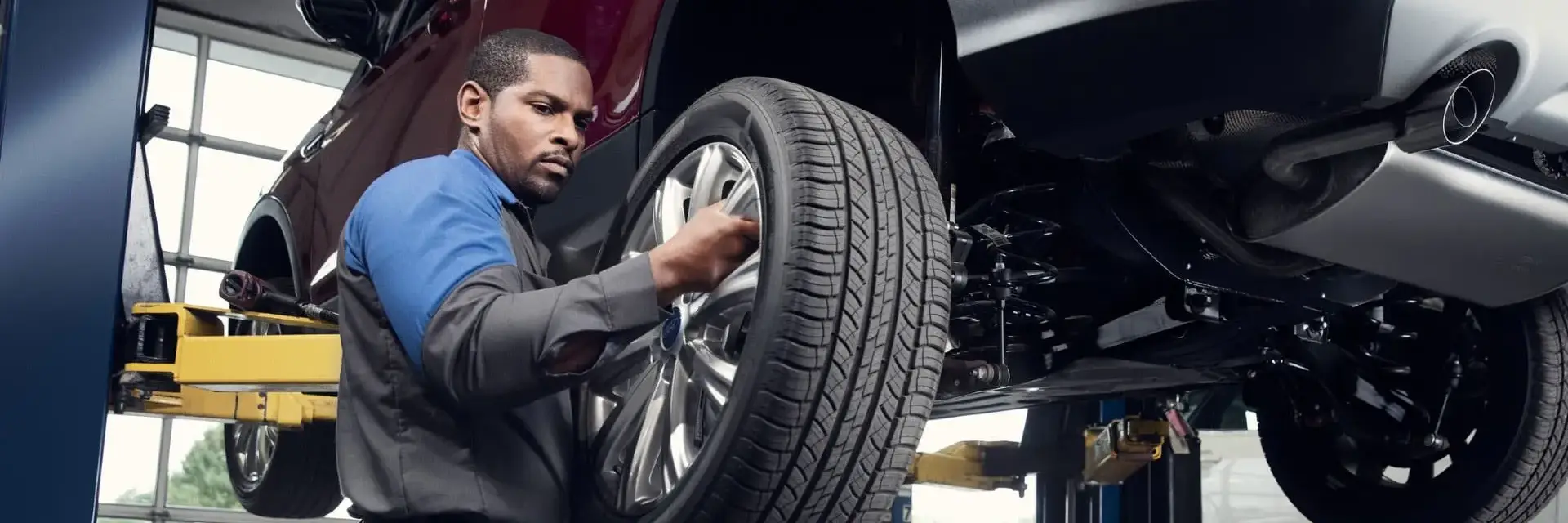
Ford Tire Service Near Rochester
Proper traction and handling start from the ground up, making regular tread maintenance an essential part of vehicle ownership. Having properly balanced and rotated wheels keeps you safe during sudden stops and poor weather conditions. We take pride in delivering meticulous care that extends the lifespan of your treads while maximizing your daily fuel efficiency. Proper rubber contact with the pavement directly impacts how your car accelerates and brakes. Drivers commuting through Canandaigua frequently visit our facility for reliable assessments from technicians who understand exactly how these specific components wear over time. You can use our online tool to set up an expert automotive service appointment so our staff can inspect your current tread depth.
Schedule ServiceThe Long-Term Value of Routine Tire Service
Neglecting regular tread checks forces certain wheels to bear significantly more weight and friction than the others. Uneven wear patterns develop quite rapidly under those conditions, reducing your overall grip on wet or icy roads. By staying current with routine maintenance, you prevent premature replacements and immediately improve your daily driving experience. The steering wheel feels much more responsive, and the suspension system does not have to work as hard to keep the cabin stable. Catching alignment or balance issues early preserves your suspension components over the long haul. Ignoring these maintenance intervals places unnecessary stress on your axles and wheel bearings. People traveling from Rochester notice a distinct difference in highway ride quality after having their wheels professionally aligned and rotated by our dedicated staff.
Is Your Vehicle Due for Tire Service?
A noticeable vibration in the steering wheel often indicates that a balance adjustment is required to smooth out the ride. You might also notice the car pulling slightly to one side on a straight road instead of holding a centered line. Physical inspections at home are quite useful, especially if the outer tread looks significantly lower than the middle section. Most manufacturers recommend rotating your wheels every six months to maximize their usable lifespan. While watching for these visual warning signs helps, a professional evaluation gives you a definitive answer on your remaining tread life. Addressing these minor symptoms quickly prevents larger drivability issues from forming later. We encourage residents of Geneva to have our technicians properly measure tread depth and inspect the inner sidewalls for hidden structural damage.
The Difference Between Tradition Ford and Independent Shops
Having maintenance handled by our factory-trained automotive technicians means your vehicle is evaluated by professionals who specialize directly in the Ford lineup. General repair shops work on many different automotive brands, making it difficult for their mechanics to know the exact geometric specifications of your specific suspension system. We use genuine manufacturer components and approved fluids to restore your car to strict factory standards. Every single visit includes a thorough multi-point inspection to evaluate the entire wheel and braking assembly. Drivers can easily review our current service and parts specials before arriving for their scheduled appointment. While our staff completes the requested work, guests are always welcome to browse the new Ford cars, trucks, and SUVs available on our lot.
Frequently Asked Questions About Ford Tire Service
Potholes and rough roads slowly push your suspension out of its factory specifications over months of driving. Most vehicles benefit from a computerized alignment check once a year to verify that all four wheels are pointing perfectly straight.
A rotation involves moving the wheels to different positions on the vehicle to promote even tread wear across all four corners. Balancing requires mounting the wheel on a specialized machine to attach small weights, correcting any heavy spots that cause vibrations at higher speeds.
Steering wheel vibrations usually point to a wheel that has lost its balance weights or a tire with internal structural damage. A technician can test the assembly to determine if a simple rebalance will resolve the shaking issue entirely.
Driving on uneven tread reduces your stopping power and increases the risk of hydroplaning in wet weather. Eventually, the exposed rubber will wear down to the metal cords, leading to a sudden blowout on the road.
Underinflated tires create excessive rolling resistance, forcing your engine to burn more fuel to maintain the same speed. Keeping the pressure at the recommended level maximizes your gas mileage and keeps the rubber from overheating on long trips.